Standard Operating Procedure: Fish Heading Methods Following HACCP Principles
By. Fajar - 11 Mar 2026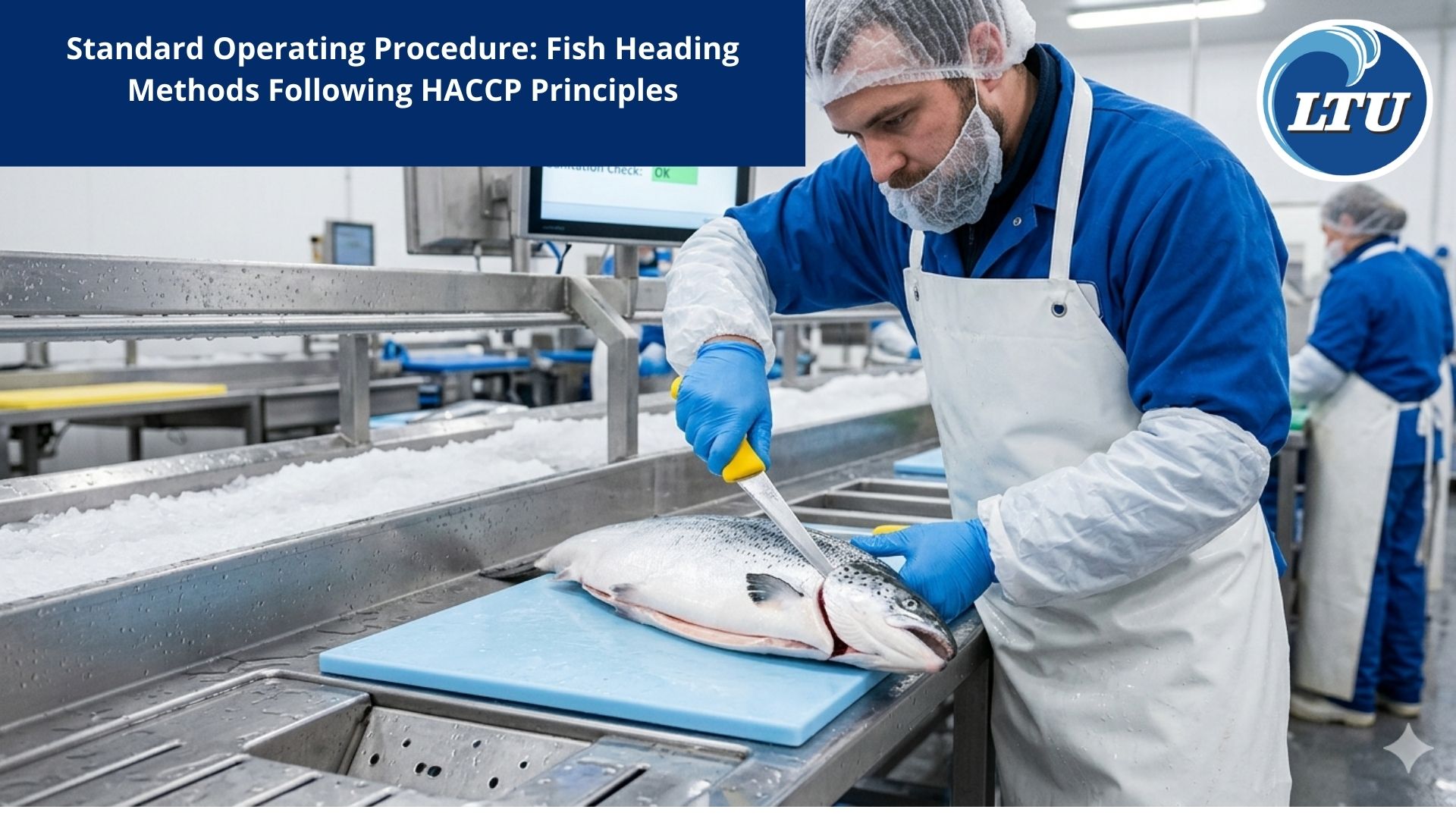
lauuttimur.com In the global seafood industry, the transition from raw material to a processed product begins with a critical first step: Heading. While it may seem like a simple mechanical task, the method used to remove a fish's head significantly impacts yield, quality, and, most importantly, food safety.
To meet international export standards, processing facilities must align their heading methods with HACCP (Hazard Analysis and Critical Control Points). This systematic approach ensures that biological, chemical, and physical hazards are mitigated from the moment the knife touches the fish.
1. The Pre-Requisite: Sanitation and Temperature Control
Before any cutting begins, HACCP protocols require a strictly controlled environment. The "Cold Chain" is the backbone of seafood safety.
- Temperature Management: The ambient room temperature should be maintained below 12°C, and the internal temperature of the fish must remain as close to 0°C as possible (usually achieved via slurry ice or chilled seawater). This inhibits the growth of pathogenic bacteria like Listeria monocytogenes.
- Sanitation: All cutting surfaces, conveyor belts, and knives must be sanitized using food-grade chlorine or peracetic acid solutions. Cross-contamination is a primary biological hazard in the heading stage.
2. Anatomical Precision: The "Straight" vs. "Round" Cut
There are two primary manual methods for heading fish under HACCP, chosen based on the species and the intended final product (fillet or HG - Headed & Gutted).
A. The Straight Cut
This method involves a vertical cut directly behind the gill covers. While fast and efficient for high-volume processing, it often results in a loss of "collar meat."
- HACCP Consideration: The cut must be clean. Ragged edges provide more surface area for bacterial colonization and can harbor physical hazards like bone fragments.
B. The Round Cut (The "J-Cut")
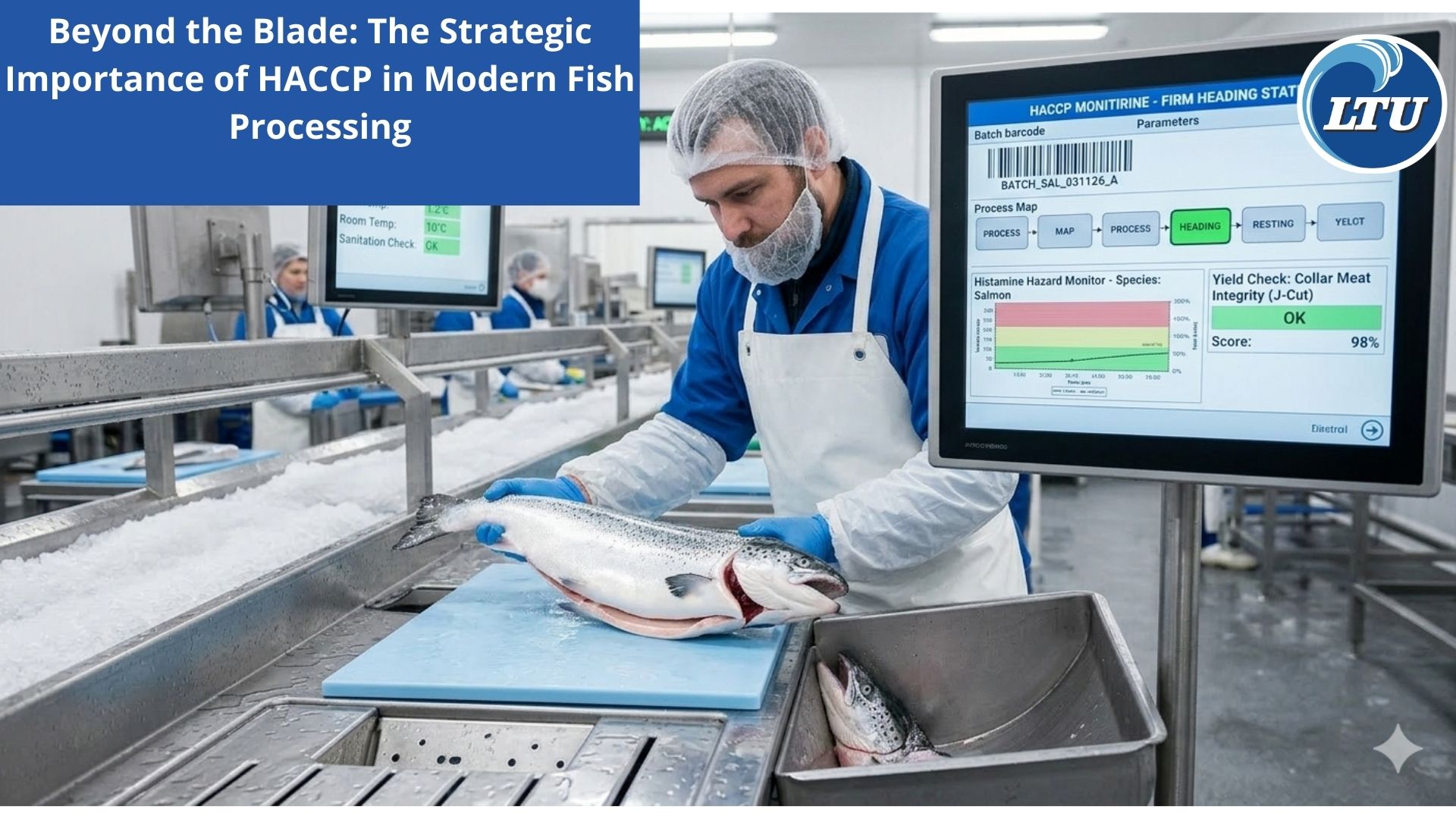
This is the preferred method for high-value species like Salmon or Snapper. The knife follows the curve of the operculum (gill cover) toward the pectoral fin.
- Yield & Safety: By following the natural anatomy, processors maximize meat recovery. From a HACCP perspective, this method minimizes the exposure of the spinal cord and brain matter, which—in certain species—can be a site for specific biological concerns.
3. Step-by-Step Procedure for HACCP-Compliant Heading
To ensure consistency and safety, the following steps are generally standardized in a professional facility:
- Positioning: The fish is placed on a sanitized high-density polyethylene (HDPE) board. It should be positioned belly-away or belly-toward the processor depending on the specific line flow.
- The Initial Incision: The knife is inserted just behind the pectoral fin. In a HACCP-compliant flow, the knife must be sharpened frequently; a dull blade requires more pressure, increasing the risk of "smearing" fats and proteins, which encourages microbial growth.
- The Spinal Snap: Once the flesh is cut, the fish is often bent slightly to expose the vertebrae. A precise cut through the joint prevents the splintering of bones. Bone fragments are classified as a Physical Hazard under HACCP.
- The Clean Break: The head is removed, ensuring the "collar" remains intact if specified. The head is immediately diverted to a waste stream (By-product category) to prevent it from touching the clean carcasses.
4. Hazard Analysis at the Heading Station
Under a HACCP plan, the heading station is often monitored for specific risks:
- Biological Hazards: Histamine formation (Scombrotoxin) is a major concern in species like Tuna or Mackerel. If the heading process is too slow and the temperature rises, histidine converts to histamine. This is irreversible even by cooking.
- Physical Hazards: Metal fragments from knives or broken machinery. Many HACCP plans require a Metal Detection step immediately following heading and gutting.
- Chemical Hazards: Lubricants from heading machines (if automated). Only food-grade lubricants are permitted.
5. Automated Heading: The Modern Standard
In large-scale operations, mechanical heading machines (like Baader or Toyo) are used. These machines use electronic sensors to measure the size of each fish, adjusting the blades to ensure the most efficient cut.
- HACCP Advantage: Automation reduces human contact with the fish, significantly lowering the risk of Staphylococcus aureus contamination from workers' hands. However, these machines require rigorous CIP (Clean-in-Place) cycles to prevent biofilm buildup.
6. Post-Heading Quality Check
Immediately after heading, the fish enters the "evisceration" or "gutting" stage. A quality control (QC) officer checks for:
- Cleanliness of the cut: No ragged flesh.
- Presence of gills: Any remaining gill tissue must be removed as it is highly perishable and carries a high bacterial load.
- Blood Removal: The "bloodline" along the spine must be accessible for cleaning.
If youre interested in our Red / Scarlet Snapper Whole Round / Whole Gilled Gutted Scaled,Emperor Fillet Skinless,White Snapper Pearl Perch Whole Round / Whole Gilled Gutted Scaled please do not hesitate to contact us through email and/or Whatsapp