Quality as a Currency: How Top Companies Master the Art of Selling Premium Fish
By. Fajar - 24 Feb 2026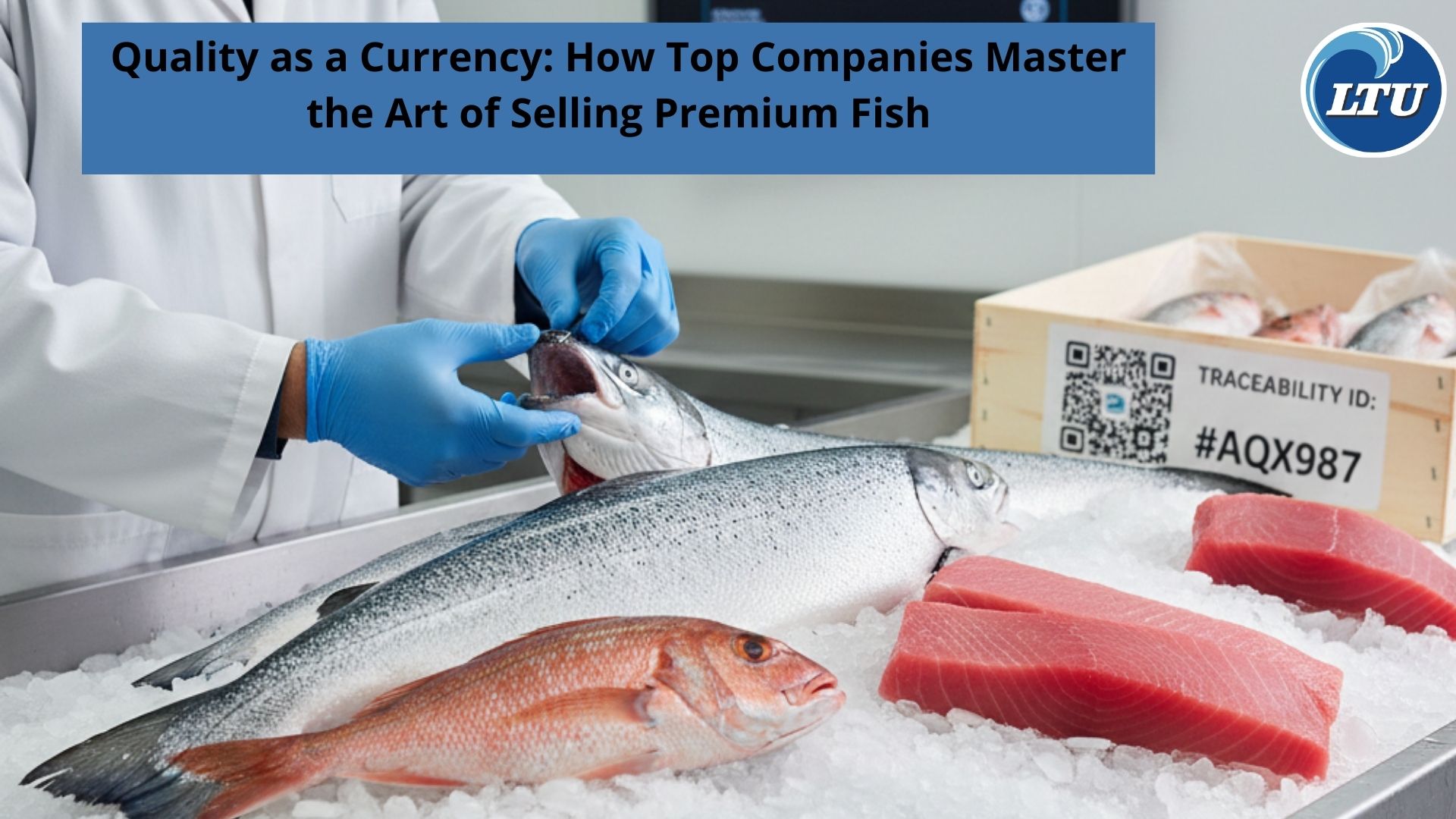
lauttimurutama.com In the global food industry, fish is one of the most challenging commodities to manage. Unlike grain or canned goods, seafood is a race against time. For a company, selling high-quality fish isn't just about having a good product; it is about managing a complex, high-stakes ecosystem of logistics, science, and ethics.
When a company successfully markets "premium" fish, they aren't just selling protein—they are selling a guarantee of safety, flavor, and integrity. Here is an in-depth look at the strategic pillars companies use to ensure and sell top-tier seafood.
1. The Logistics of the "Cold Chain"
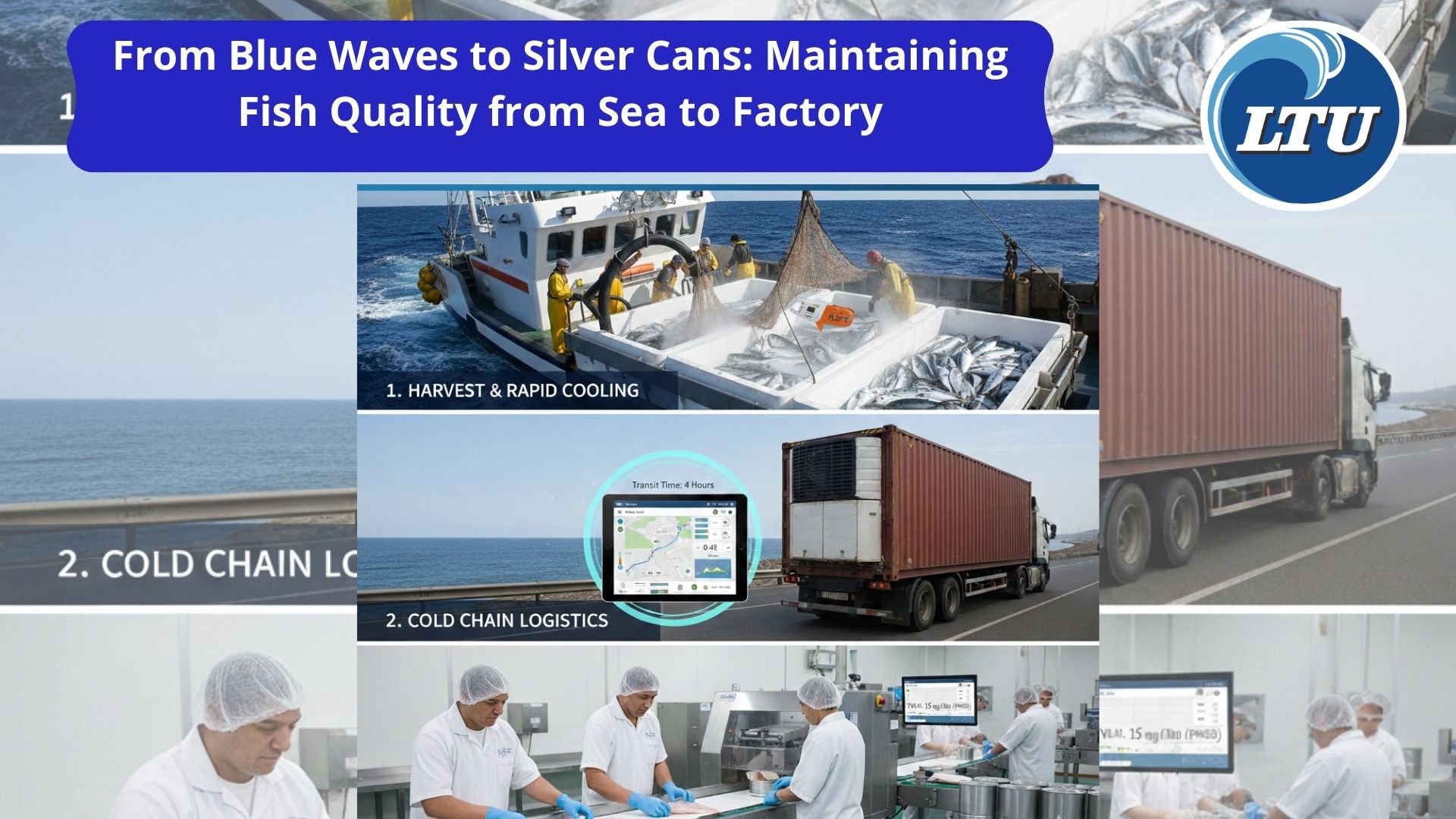
The single most important factor in fish quality is temperature control. Top-performing seafood companies invest heavily in Cold Chain Management. The goal is to keep the fish at a constant temperature, ideally between $0^\circ\text{C}$ and $2^\circ\text{C}$, from the moment it is pulled from the water until it reaches the consumer.
Companies use advanced telemetry and IoT (Internet of Things) sensors in their shipping containers. These devices provide real-time alerts if a refrigerator's temperature fluctuates by even a single degree. By maintaining this "unbroken" chain, companies prevent the growth of histamine-producing bacteria, ensuring that the fish remains sashimi-grade for as long as possible.
2. Vertical Integration and Sourcing
To guarantee quality, many leading companies are moving away from open-market auctions and toward vertical integration. This means the company either owns the fishing vessels or has exclusive, long-term contracts with specific day-boat fishermen.
By sourcing from "day-boats"—vessels that go out and return within 24 hours—companies can sell fish that was swimming in the ocean less than a day ago. This is a massive selling point. In their marketing, companies highlight the specific vessel or even the name of the captain, transforming a faceless commodity into a story of craftsmanship.
3. Rigorous Quality Inspection Standards
A professional seafood company doesn't just eye-ball a fish; they use a standardized "sensory assessment" to grade every batch. They train their staff to look for specific "Gold Standards":
- The Olfactory Test: High-quality fish should smell like the sea or fresh cucumbers, never "fishy" or like ammonia.
- The Elasticity Test: When pressed, the flesh should spring back immediately. If a finger indentation remains, the cellular structure has begun to break down.
- The Clarity Index: Clear, bulging eyes and bright red gills are non-negotiable indicators of a recent catch.
Companies that sell to high-end restaurants often provide "grading certificates," much like those found in the Wagyu beef industry, to prove the physiological state of the fish at the time of processing.
4. Technological Innovations: Super-Freezing and MAP
While "fresh" is a powerful buzzword, many top companies are now selling "Frozen at Sea" (FAS) products using Super-Freezer technology. These units freeze fish to $-60^\circ\text{C}$ within minutes. At this extreme temperature, the water molecules inside the fish cells do not form large ice crystals, which would otherwise puncture the cell walls and make the fish mushy upon thawing.
Additionally, companies use Modified Atmosphere Packaging (MAP). By replacing the oxygen inside a package with a specific mix of nitrogen and carbon dioxide, they can naturally inhibit the growth of aerobic bacteria, extending the shelf life of a fresh fillet by several days without using chemical preservatives.
5. Transparency and Traceability
In the modern market, "quality" includes the ethical footprint of the product. Companies use Blockchain Traceability to allow customers to scan a QR code on the packaging. This code reveals:
- The exact GPS coordinates where the fish was caught.
- The method used (e.g., pole-and-line vs. bottom trawling).
- Sustainability certifications like the MSC (Marine Stewardship Council).
This transparency justifies a premium price point. It tells the consumer that the company has nothing to hide and that the fish is exactly what the label says it is.
6. Value-Added Education
Finally, companies sell quality by teaching the consumer how to handle it. A $50 tuna steak can be ruined by poor cooking. Successful companies provide:
- Handling Guides: Instructions on how to properly pat the fish dry to achieve a perfect sear.
- Custom Cuts: Offering "Center-Cut" loins (the most uniform and tender part) versus tail pieces.
- Chef Partnerships: Using professional chefs to demonstrate the product's quality through videos and recipes.
If youre interested in our Red / Scarlet Snapper Whole Round / Whole Gilled Gutted Scaled,Emperor Fillet Skinless,White Snapper Pearl Perch Whole Round / Whole Gilled Gutted Scaled please do not hesitate to contact us through email and/or Whatsapp